The Media Notepad: Byron Allen’s “Comics Unleashed” off to rough ratings start
Also: Cubs-White Sox series a hit for The U and CHSN; FCC and Disney drop the gloves over licenses
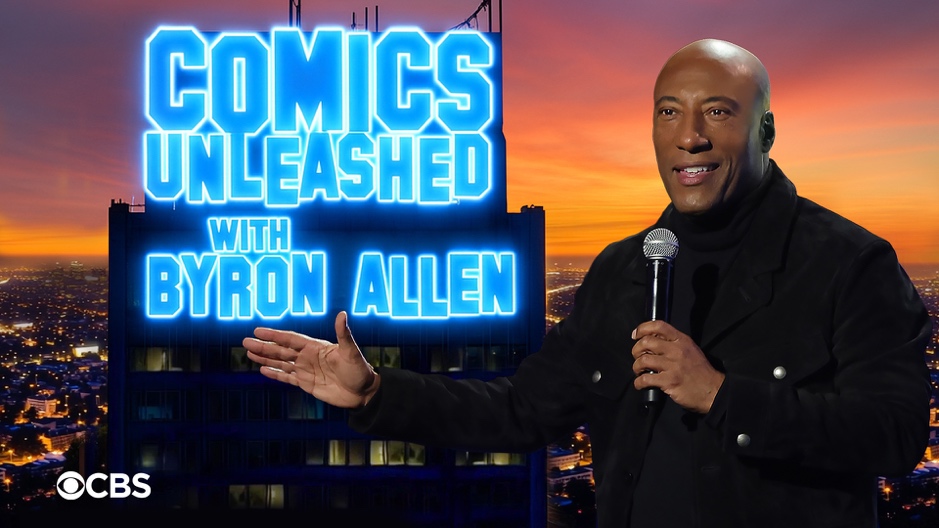
As expected, few viewers turned in last Friday night (May 22) to watch Stephen Colbert’s replacement as Byron Allen’s Comics Unleashed took over The Late Show’s old time slot, which ended the night before.
According to Nielsen figures, Unleashed in its first half-hour (10:35 p.m.) drew 995,000 viewers, with 116,000 of them in the adults 18-49 demo. The second half-hour – a repeat from last September, only drew 600,000 viewers and 55,000 in the 18-49 demo. Combined, Unleashed was down 85 percent in viewers and 95 percent in the younger demo from the night more, and fell from a Late Show repeat from the week before, down 46 percent in viewers and 65 percent in the demo.
Against its competition, the show fell behind a new episode of NBC’s Tonight Show With Jimmy Fallon (1.5 million viewers, 319,000 in the key demo), despite being delayed by a half-hour due to an NBA overrun, and a repeat of Jimmy Kimmel Live! (1.6 million total viewers, 208,000 in the key demo.)
Among metered markets however, Unleashed seemed to do better, finishing first at 11:35 p.m. ET in households in Greensboro, N.C., Louisville, Dayton, and Ft. Myers, beating both Kimmel and Fallon. Among adults 25-54, Unleashed topped both shows in Seattle, according to a press release by Allen Media Group as you can see below, who is leasing the two-hour block (with the second hour filled with reruns of Funny You Should Ask) and selling the ad time themselves.
Notably missing in this list is major markets such as Chicago, New York City, Philadelphia, Dallas, Houston, and Atlanta. On CBS Chicago (WBBM-TV), Unleashed Friday faced local competition (other than Kimmel) from NBC 5’s delayed 10 p.m. newscast, GN Sports, and off-network series Seinfeld and Law & Order: Special Victims Unit. The second half-hour was up against a new Fallon, and off-network syndicated series Young Sheldon, Chicago Fire, and Modern Family.
CBS said on Thursday it will turn a $15 million profit on the Allen Media Group block. Earlier, it claimed it was losing $40 million on Colbert’s old show.
Keep in mind one night does a ratings hit make, but you have to wonder what impact this will have on CBS’ affiliates and its owned-and operated stations – especially CBS Chicago, which has been a non-factor in the local 10 p.m. race for decades. And even though Allen sells the national ad time, there are local avails station have to sell – and one could assume those spots are selling for depressed rates, which will not make affiliates happy, which are stuck with the shows due to tighter preemption rules – something that didn’t exist in the 1970s and 1980s when many CBS affiliates either delayed or declined the network’s late-night lineup, as it consisted of mostly reruns and movies.
A suggestion by Matthew Keys of The Desk on Thursday stated CBS should give the late-night time period back to affiliates to program. Before The Merv Griffin Show premiered in 1969, CBS stations programmed the slots themselves, usually with old movies.
 The Chicago White Sox won the Crosstown Series over the Cubs, and it turns out they also won the ratings battle.
According to Nielsen via the Chicago Tribune, the May 15-17 weekend series at Rate Field saw Chicago Sports Network top Marquee for all three games – thanks to Weigel’s The U (WCIU) simulcasting the contests. On Friday, Game 1 drew 207,000 viewers across CHSN and WCIU, with 172,600 viewers tuning in on both channels for Saturday night’s game, and the rubber match on Sunday – which featured a White Sox walk-off to give them a dramatic win over their North side rivals – drew 219,700 viewers, topping the Chicago market Sunday afternoon.
The three game series averaged averaged 200,000 for CHSN/WCIU, and 112,000 for Marquee, according to the Sun-Times and was the most-watched series involving the White Sox five years.
The Cubs-White Sox series also helped drive direct-to-consumer sales of CHSN, with subscriptions up 35 percent, according to CHSN President and CEO Mike McCarthy, who previously served as same general manager at Marquee. Also helping drive subscriptions the White Sox’s improved play this season. On Thursday, the team won its 29th game of the season – something they did not achieve in the infamous 2024 season until August 12.
Earlier this spring, The U struck a deal to continue carrying at least ten Chicago White Sox games for a second straight season, following a trend several Major League Baseball teams have taken as regional sports networks’ collapsed, especially the FanDuel regional sports networks, which recently ceased operations and is off the air.
By comparison, Marquee, which has been the exclusive home of the Cubs since 2020 after decades on WGN-TV and elsewhere, do not have any local television deal. Both Marquee and CHSN are now available on Xfinity’s (Comcast’s) Ultimate Tier, which costs $20 more.
WCIU plans to simulcast CHSN for the White Sox’s lone road game on their schedule – an August 17 matchup against the Cubs at Wrigley Field.
Tensions between Disney and the FCC has escalated further, as the two are likely headed to court over the company’s eight television licenses.
On Thursday, Disney filed their license renewal applications after the agency moved up the date, and did so under protest, stating the action was meant to chill speech and called the action “unconstitutional retaliation”.
“The Order is inconsistent with a legitimate exercise of investigative authority and is plainly incompatible with the First Amendment,” a letter sent to the FCC in behalf of New York’s WABC-TV said. “Worse, the Order opens the door to an assault on the Station’s license, while the Commission searches for a legal pretext to achieve its desired goal. This effort to suppress speech under the guise of bureaucratic process must not prevail. WABC files this application without waiving any rights, and calls on the Commission to rescind the Order.” The letter said that the DEI charges were a sham and is basically going after the network for airing speech the Trump Administration doesn’t like.
On Friday, FCC Chairman Brendan Carr defended his actions in an interview with CNBC, insisting it was due to DEI violations, and not criticism of President Trump and his administration from late-night host Jimmy Kimmel. The FCC challenge was filed a day after Trump called on ABC to fire Kimmel.
“I understand Disney wants to make this about a lot of other things, and their PR machine has been in high gear, but we’ve been very clear about what this is: concerns about invidious forms of DEI discrimination,” Carr said on Squawk On The Street.
When asked about the possibility of pulling licenses of ABC’s eight stations – including WLS-TV in Chicago, Carr said his agency will “follow the facts and the law wherever they go.”
The last time any local station in the U.S. had their license revoked was in 1990, coming in the middle of an eleven-year court battle between Monroe Communications and Video 44 over WSNS-TV.
The FCC reminded stations of their “public interest” obligations, something the agency hasn’t provided guidance on.
With the action, the FCC now can open up public comment on whether or not ABC should have their eight licenses renewed, mostly located in the nation’s largest cities including New York, Los Angeles, and Houston. As far as Chicago is concerned, you can expect public comments from the likes of local right-wing staples The Chicagoan Contrarian and Dan Proft. Whether Carr will take up their “complaints” in a metro area that is solidly blue remains to be seen, because as we all know, some people’s “public interest” is more important than others.