Netflix adds French broadcaster to streaming service
But don’t look for a similar deal in the U.S. anytime soon, if ever
On June 18, a landmark deal was made that brings together an old-school television network and a new-school global streamer.
But it wasn’t in the United States—nor anywhere in this part of the globe.
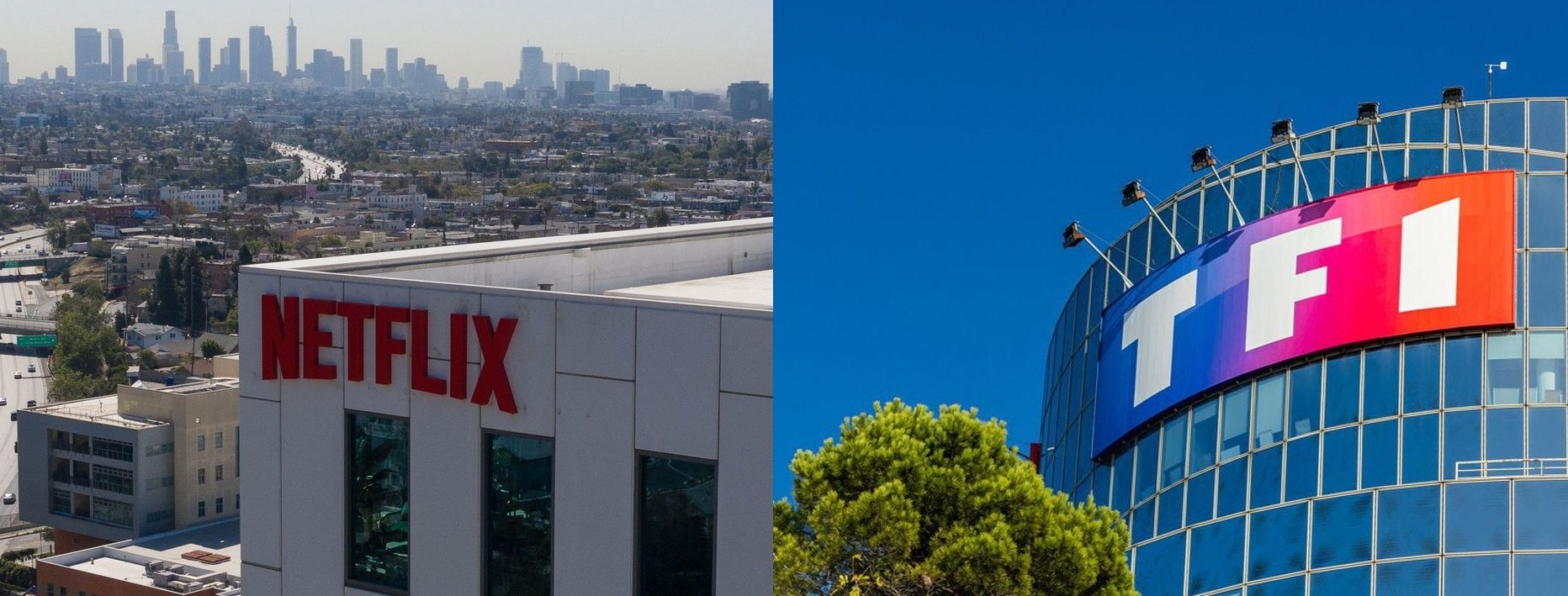
This landmark agreement was signed on June 18 in France, where Netflix and French broadcaster TF1 announced a groundbreaking partnership. Under the terms of the agreement, Netflix will stream five of TF1’s over-the-air broadcast channels on its platform, effective next summer. It marks the first time any streamer has carried a broadcast network not under the same corporate umbrella. The deal also makes 30,000 hours of TF1’s on-demand content (through TF1+) available to subscribers. TF1 airs news, soap operas, dramas, and sports, including soccer and rugby.
The Netflix-TF1 deal was announced at Cannes Lions, a five-day festival for those in the advertising and creative communications fields. TF1 was founded in 1935 as Radio-PPT Vision and officially launched the TV network in 1949. It evolved into TF1 in 1975, transitioning from a public broadcaster to private in 1987. TF1 is owned by Group TF1, and CEO Rodohlpe Belmer used to sit on Netflix’s board.
“This is a first-of-its-kind partnership that plays to our strengths of giving audiences the best entertainment alongside the best discovery experience,” said Greg Peters, co-CEO of Netflix. “By teaming up with France’s leading broadcaster we will provide French consumers with even more reasons to come to Netflix every day and to stay with us for all their entertainment.”
“I am delighted about this new partnership with Netflix, with whom we have already established strong relationships through ambitious co-productions in recent months,” said Rodolphe Belmer, CEO of TF1 Group. “As viewing habits shift toward on-demand consumption and audience fragmentation increases, this unprecedented alliance will enable our premium content to reach unparalleled audiences and unlock new reach for advertisers within an ecosystem that perfectly complements our TF1+ platform.”
Like Televisa in Mexico, TF1 is a dominant ratings powerhouse in France. Its five channels reach 58 million viewers per month across linear platforms and 35 million through TF1+.
This deal could open up Netflix partnerships in other countries, analysts noted. But would something like this happen in the U.S.?
Don’t count on it. In France, TF1 is transmitted through translators across France. In the U.S., networks are carried by independent station groups (such as Tegna, Sinclair, and Gray), except for the nation’s three largest markets – Chicago, New York, and Los Angeles. Nexstar, the nation’s largest station group, owns CW affiliates in the top three and dozens of Fox, CBS, ABC, and NBC affiliates.
While CBS, NBC, ABC, and Fox have rights to negotiate with streamers on behalf of those groups, the FCC is working to change this as Chairman Brendan Carr wants to give these groups more power to negotiate their own carriage rights with virtual providers such as Hulu + Live TV and YouTubeTV, meaning they would extract retransmission consent money – similar to cable and satellite providers. These types of agreements do not exist in France or most other countries.
“While U.S. teams are still stuck optimizing bundles and measuring ‘attention’, Europe is building the next evolution of streaming.”, said NBCUniversal create products director S.J. McKenzie in a LinkedIn piece, referring to the cable ‘bundle’ which still dominates in the U.S. despite cord-cutting and cable’s eroding subscriber numbers. “[The move] should have every U.S. media exec on alert.” Given Televisa’s dominance in Mexico amid a somewhat similar setup, this could be the next market Netflix could target.
This is the latest evolution of Netflix, which diversified its programming slate in the last two years, adding WWE Raw and live sports to the streaming service, such as NFL games on Christmas. Netflix also added a cheaper ad tier – something they once said they would never do.
However, nothing is set in stone, and Netflix is evolving with the times.